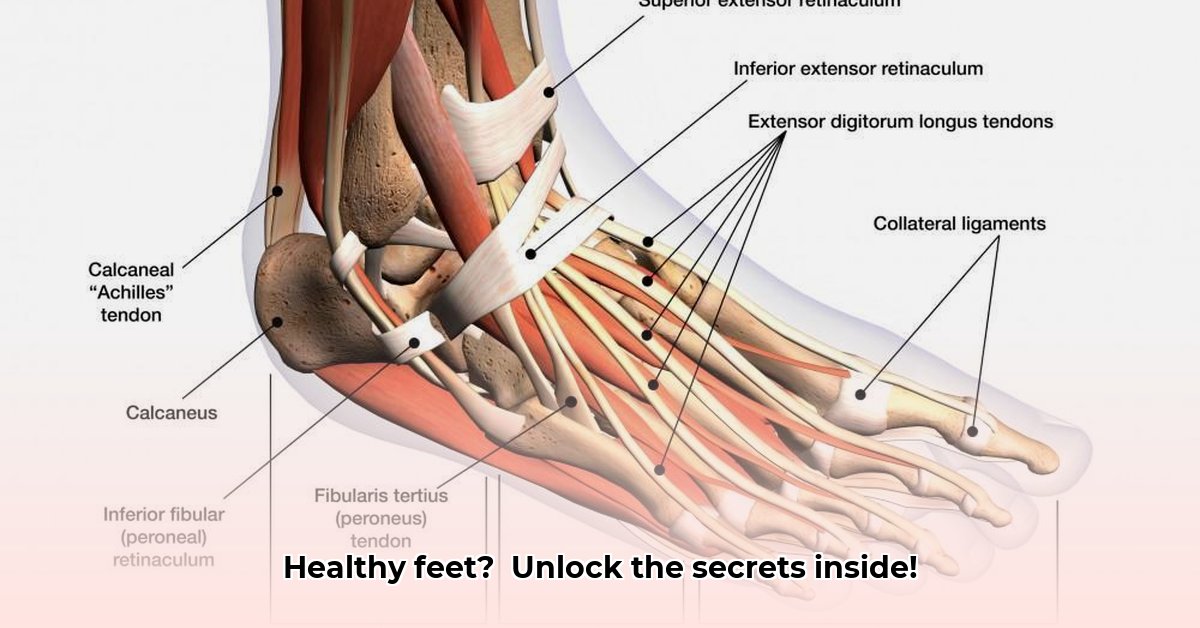
Your Feet: Engineering Marvels
Your feet, often overlooked, are engineering marvels supporting your every move. Each foot contains around 26 bones (some sources say closer to 28!), over 30 joints, and a complex network of muscles, tendons, and ligaments. This intricate design enables movement, balance, and shock absorption. Understanding this design is key to maintaining healthy feet. For a visual guide to foot parts, check out this helpful resource: Foot Parts Diagram.
The Bone Structure: A Closer Look
The foot's bone structure is divided into three sections: the hindfoot (heel and ankle), the midfoot (arch), and the forefoot (metatarsals and toes). The largest bone, the calcaneus (heel bone), acts as a shock absorber. The arch, a natural spring supported by the plantar fascia (a strong band of tissue), distributes weight evenly. The metatarsals connect the toes to the rest of the foot. Did you know that the intricate arrangement of these bones allows for the incredible flexibility and agility of your feet?
The Support System: Muscles, Tendons, and Ligaments
Beyond bones, your feet comprise muscles, tendons (connecting muscles to bones), and ligaments (holding bones together). The plantar fascia plays a crucial role in arch support and preventing strain. This complex system works together to provide both stability and flexibility, allowing for efficient movement and injury prevention. A healthy foot relies on the coordinated action of all these components.
The Sensory Network: Your Foot's Nerves
Your feet are densely packed with nerves, constantly sending sensory information (touch, pressure, temperature, pain) to your brain. This allows you to adjust your gait based on the surface you're walking on. Nerve issues can cause numbness, tingling, or pain. This constant feedback loop is what enables your feet to adapt to various terrains and protect themselves from potential harm. How often do you actually consciously think about this intricate system at work?
Common Foot Problems: Understanding the Causes
Many common foot problems directly relate to the foot's structure:
- Plantar fasciitis: Heel and arch pain caused by plantar fascia inflammation. This inflammation occurs because the fascia is being overstretched or strained.
- Bunions: Bony bumps at the base of the big toe, often from ill-fitting shoes, bone misalignment, or genetics. The pressure and friction from shoes can significantly exacerbate this issue.
- Achilles tendonitis: Inflammation of the Achilles tendon (connecting calf muscles to the heel), often from overuse or injury. The repetitive strain placed on this tendon during activities like running can lead to inflammation.
- Hammertoe: A bent toe joint, often due to ill-fitting shoes or muscle imbalances. This deformity can cause significant discomfort. Choosing shoes that provide adequate spacing in the toe box can help prevent this.
Understanding these causes helps prevent them.
Keeping Your Feet Happy: Simple Steps for Healthy Feet
These simple steps promote foot health:
- Choose the right shoes: Wear supportive shoes that fit well, offering adequate arch support and a spacious toe box. Avoid high heels and flimsy footwear. Proper footwear is crucial for long-term foot health.
- Maintain cleanliness and dryness: Wash your feet daily and dry them completely, especially between toes, to prevent fungal infections. This hygiene practice can prevent several common foot problems.
- Stretch regularly: Regular stretching maintains flexibility and prevents stiffness. Simple stretches for your feet and calves will make a significant difference.
- Trim toenails correctly: Cut them straight across to avoid ingrown toenails. Proper toenail trimming prevents potentially painful ingrown toenails.
- Regular self-examination: Regularly inspect your feet for changes, blisters, or redness. Early detection is key for effective treatment.
- Consult a podiatrist: See a podiatrist (foot specialist) if you have persistent pain or concerns. Podiatrists can provide expert diagnoses and treatment.
Following this plan can significantly reduce the likelihood of developing common foot ailments.
Extra Tips for Happy Feet
| Tip | Benefits |
|---|---|
| Regular exercise | Strengthens foot muscles, improves circulation, prevents injuries |
| Proper footwear | Supports arches, cushions impact, prevents issues |
| Maintaining a healthy weight | Reduces stress on feet, ankles, and knees |
| Treat injuries promptly | Lessens chance of long-term problems. |
Remember, individual needs vary. Consult a healthcare professional for personalized advice.
How to Prevent Common Foot Problems Based on Anatomy
Key Takeaways:
- Supportive footwear is crucial for foot health.
- Good foot hygiene prevents infections.
- Regular foot care is essential for long-term health.
- Understanding foot anatomy helps identify problem areas.
- Early intervention is key in managing foot issues.
- Professional podiatric care is vital for complex problems.
The foundation of foot health lies in understanding your foot's anatomy. Ignoring this fundamental understanding can lead to avoidable problems in the future.
Understanding Your Foot's Structure: Prevention's Foundation
Your foot's complex structure is designed for balance and mobility. Understanding this design is paramount to preventing common foot problems. Proper arch support, for example, is crucial for preventing pain and discomfort associated with conditions such as plantar fasciitis. Similarly, maintaining the strength and flexibility of the muscles around your foot provides support and reduces the risk of injury.
Common Foot Ailments: A Preventative Perspective
Many foot issues result from overuse, improper footwear, or underlying conditions. Plantar fasciitis, often caused by overpronation (inward foot rolling), can be mitigated by selecting shoes with proper arch support. Bunions, frequently linked to ill-fitting footwear, can be prevented by choosing wider shoes that accommodate the shape of your toes. Athlete's foot, a fungal infection, thrives in damp environments, highlighting the importance of thorough foot drying. Understanding these causal links empowers us to implement preventative actions.
Practical Steps for Foot Health: A Preventative Approach
Protect your feet by following these steps:
- Choose the right footwear: Select shoes with arch support, cushioning, and a roomy toe box. Avoid high heels and excessively flat shoes.
- Practice good foot hygiene: Wash your feet daily, and dry thoroughly between toes. Use antifungal powder if necessary.
- Regular foot care: Trim toenails straight across and moisturize regularly.
- Stretching and strengthening exercises: Regularly stretch the calf muscles and plantar fascia; strengthen foot muscles.
- Maintain a healthy weight: Excess weight increases stress on feet.
- Regular foot inspections: Check for abnormalities like blisters or changes in toenail appearance.
When to See a Podiatrist
Persistent foot pain or concerning changes necessitate a visit to a podiatrist for diagnosis and treatment. Ignoring warning signs can lead to long-term complications. Early intervention is key for optimal foot health.